Strategic Credit Utilization in Hybrid Tennis and Horse Racing Accumulators
Henrik Becker · Oct 29, 2026

Strategic Credit Utilization in Hybrid Tennis and Horse Racing Accumulators
Multi-sport parlays that connect tennis tiebreak outcomes with equine finish line results have gained traction among bettors seeking layered credit applications, and data from industry tracking services show these combinations often appear in accumulator structures during peak tournament seasons. Observers note that credit stacking involves sequencing promotional balances across correlated or independent events to extend playtime without immediate cash outlays, while researchers at various academic institutions have examined how such tactics interact with in-play adjustments in both sports.
Core Mechanics of Credit Application Across Events
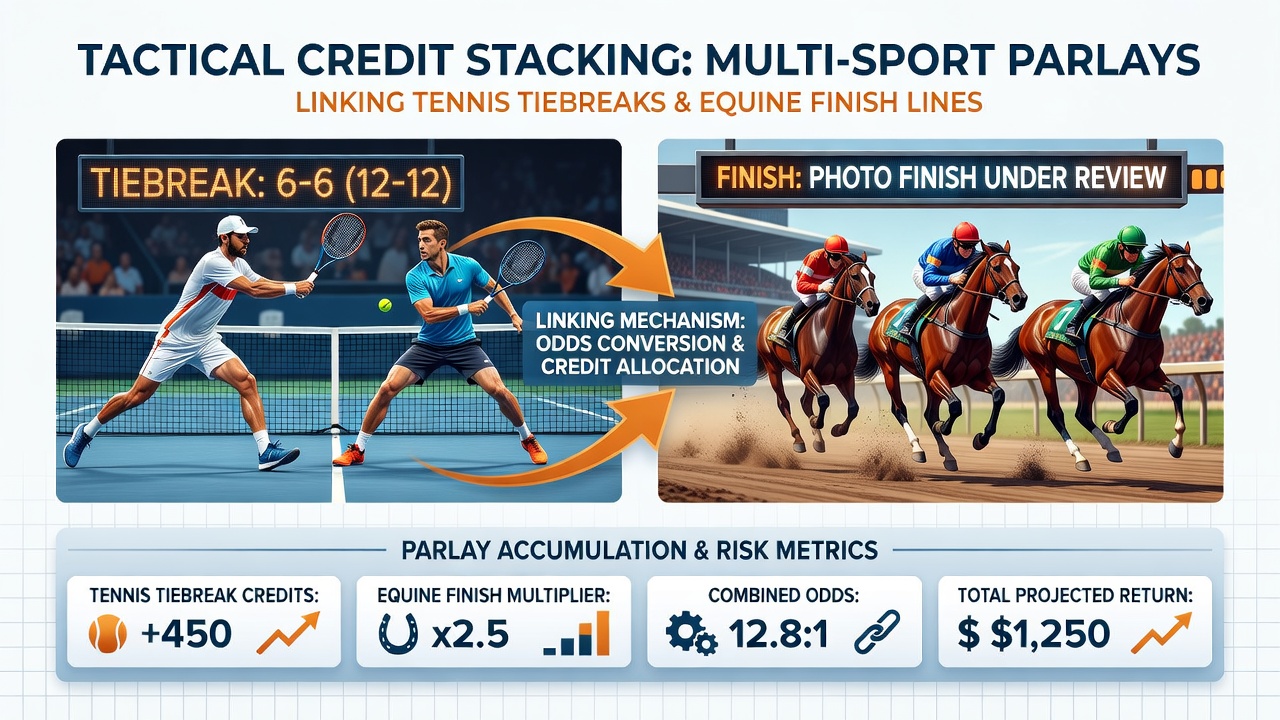
Bettors apply credits by first allocating them to a tennis tiebreak selection, then rolling any resulting balance into a subsequent horse racing leg where finish line data updates rapidly. This sequence allows the initial credit pool to support multiple wagers, and figures from regulatory reports indicate that remote channel activity for hybrid accumulators rose notably in the months leading into late 2026. Those who study these patterns find that tiebreak markets often close with tight margins, whereas equine selections can shift based on final stretch positioning, creating opportunities for timed credit transfers between the two.
Connecting Tennis Dynamics with Racing Outcomes
Tennis tiebreaks function as discrete scoring units within sets, and equine finish lines represent the conclusive segment of each race, so linking them in a parlay requires precise timing on when credits activate. Studies from North American research centers reveal that participants frequently monitor real-time feeds to determine whether a credit rollover aligns with shifting probabilities in either sport. Data collected through 2025 and into October 2026 demonstrate consistent volume in these crossovers, particularly when major tennis events overlap with prominent racing fixtures on shared weekends.
Regional Data Patterns and Reporting Sources
Canadian provincial gaming authorities have documented increases in multi-leg wagers that span racket sports and thoroughbred racing, with analysts noting that credit mechanisms help sustain participation across longer sessions. A separate examination conducted by European academic groups highlights how operators structure these parlays to accommodate varying settlement speeds between the two disciplines. In October 2026, such reports placed hybrid activity within broader seasonal trends that also encompass golf and soccer crossovers, though the tennis-equine pairing maintains distinct characteristics due to the rapid resolution of tiebreaks and stretch runs.
One documented case involved a sequence where credits funded an initial tiebreak wager at a major tournament, with the balance then applied to an equine selection whose finish line odds adjusted after late scratches. Industry organizations such as the Pennsylvania Gaming Control Board track similar usage patterns in regulated markets, and their quarterly summaries provide context on how credit balances influence overall handle without referencing specific player outcomes.
Practical Sequencing in Accumulator Construction
Participants typically begin by selecting a tennis tiebreak market that settles within a narrow window, then route any retained credit toward a horse race whose final positions determine payout eligibility. This approach relies on platforms that permit mid-session credit allocation, and evidence from multiple jurisdictions shows that such flexibility correlates with higher volumes during overlapping event calendars. Observers at trade associations have recorded that October periods often coincide with concentrated scheduling, prompting more frequent use of stacked credits to bridge the two sports.
Additional layers appear when bettors incorporate live updates, allowing the system to adjust remaining credit exposure based on unfolding tiebreak points or equine positioning. Research papers from Australian institutions have analyzed these interactions and found that settlement timing differences between the sports can either compress or extend the effective credit window depending on the chosen events.
Conclusion
Hybrid accumulators linking tennis tiebreaks and equine finish lines continue to evolve alongside platform features that support credit sequencing, with data from various regulatory and academic sources illustrating steady participation levels through 2026. Those monitoring the sector note that these structures depend on precise market alignment and operator rules governing promotional balances, while ongoing reports from bodies such as the Australian Gambling Research Centre supply further context on cross-sport activity without endorsing specific tactics.