Rally Points to Paddock Finishes: Layering Live Tennis Data with Racing Form for Multi-Leg Payout Structures
Nils Bennett · Aug 21, 2026

Rally Points to Paddock Finishes: Layering Live Tennis Data with Racing Form for Multi-Leg Payout Structures
Live tennis rallies generate streams of point-by-point statistics that include rally length, serve direction, and break-point conversion rates while horse racing form records track speed figures, sectional times, and going descriptions. Observers note that platforms combine these datasets to construct multi-leg payout structures where a tennis leg must clear a performance threshold before a horse racing leg activates. Data from the 2026 summer hard-court swing shows increased activity in these layered bets as matches unfold in real time alongside afternoon race cards.
Core Data Layers in Tennis and Racing
ATP and WTA scoreboards deliver live metrics such as first-serve percentages and return points won that update after every point. Handicappers cross-reference these figures with historical player profiles on specific surfaces. Meanwhile thoroughbred racing programs publish official past-performance lines that detail pace scenarios and trainer patterns at each track. When operators merge the feeds, a bettor can select a tennis set total alongside a horse's finishing position in a subsequent race, creating conditional payout sequences that settle only after both legs conclude.
Researchers at the University of Nevada's gaming analytics lab documented how rally-point volatility correlates with set-duration models, while parallel studies from the Australian Racing Board examined how track-variant adjustments affect final margins. These independent datasets feed into algorithmic builders that calculate joint probabilities for multi-leg tickets. Operators report that such structures appeared more frequently during the August 2026 North American hard-court swing when evening tennis sessions overlapped with evening thoroughbred meetings on the east coast.
Constructing Multi-Leg Payout Sequences
A typical structure might require a player to win at least six games in a set before a listed horse clears a place position in its race. The sequence settles sequentially: tennis data triggers first, then racing form determines the second payout tier. Bookmakers adjust odds continuously as live tennis rallies alter the implied probability for the opening leg. Once that leg locks in, the remaining racing component runs at fixed or adjusted terms depending on the operator's rules.
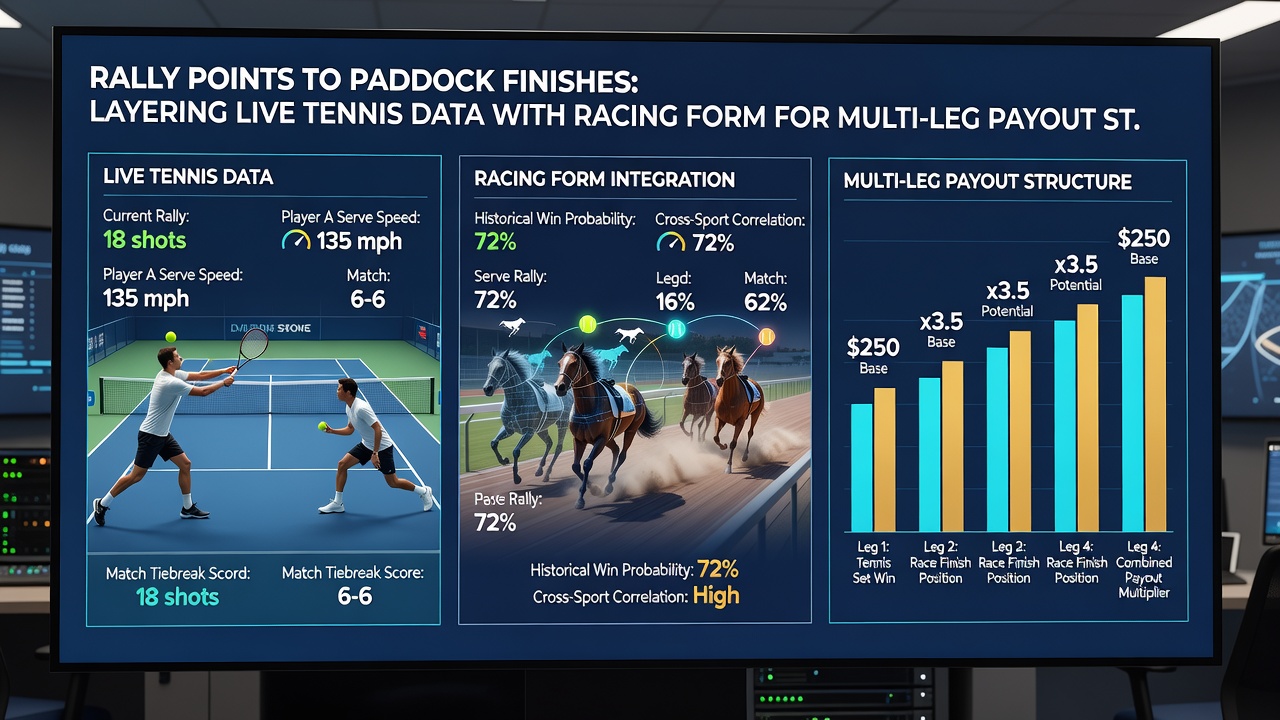
Industry reports from the American Gaming Association indicate that these hybrid tickets accounted for a measurable share of in-play handle during overlapping summer events. The same reports note that payout multipliers scale with the number of legs, yet settlement times stretch because tennis matches and races rarely finish simultaneously. Bettors therefore monitor both scoreboards and race replays through unified interfaces that timestamp each confirmation.
Timing Overlaps and Data Integration
Scheduling patterns in August 2026 placed late-afternoon tennis matches alongside evening thoroughbred cards at several North American venues. This created windows where live tennis rally data could influence the initial leg while racing form remained the decisive second component. Systems timestamp each tennis point and each race official result, then apply conditional logic to release funds only after both criteria clear. Observers note that latency differences between tennis point updates and racing photo-finish reviews require operators to maintain separate data pipelines that reconcile within seconds of each event.
Canadian provincial regulators have examined similar data-layering practices through their gaming control frameworks, requiring operators to publish clear settlement rules before accepting such wagers. Those frameworks emphasize transparent probability calculations that combine tennis point-win models with racing speed-figure adjustments. The result is a documented audit trail that shows how each leg's outcome alters the overall payout multiplier.
Settlement Mechanics and Regulatory Context
Multi-leg structures settle in stages. Tennis legs resolve after the final point of the designated set, at which moment the system either advances the ticket to the racing component or voids remaining legs according to house rules. Racing legs settle after stewards confirm results and declare official margins. Operators integrate both feeds through application programming interfaces that pull live scores from tennis data providers and official charts from racing authorities. This architecture supports the sequential verification process while maintaining a single customer-facing ticket.
Academic papers from the University of Sydney's gambling research unit have analyzed how overlapping event calendars affect bettor engagement with conditional products. Those studies highlight the role of timestamp synchronization between tennis point logs and racing sectional data as a key technical requirement. Operators that maintain accurate synchronization report fewer disputes over leg activation timing.
Conclusion
Layering live tennis rally statistics with horse racing form produces structured multi-leg payout sequences that settle across distinct event timelines. Data integration occurs through parallel feeds that update after every tennis point and after every race result. August 2026 scheduling overlaps increased visibility of these products, while regulatory frameworks in multiple jurisdictions require explicit settlement protocols. The combination remains a factual extension of existing in-play and form-based betting systems rather than an entirely new category.